The Practice of Impermanence: What Yoga & Buddhist Philosophy Have Taught Me
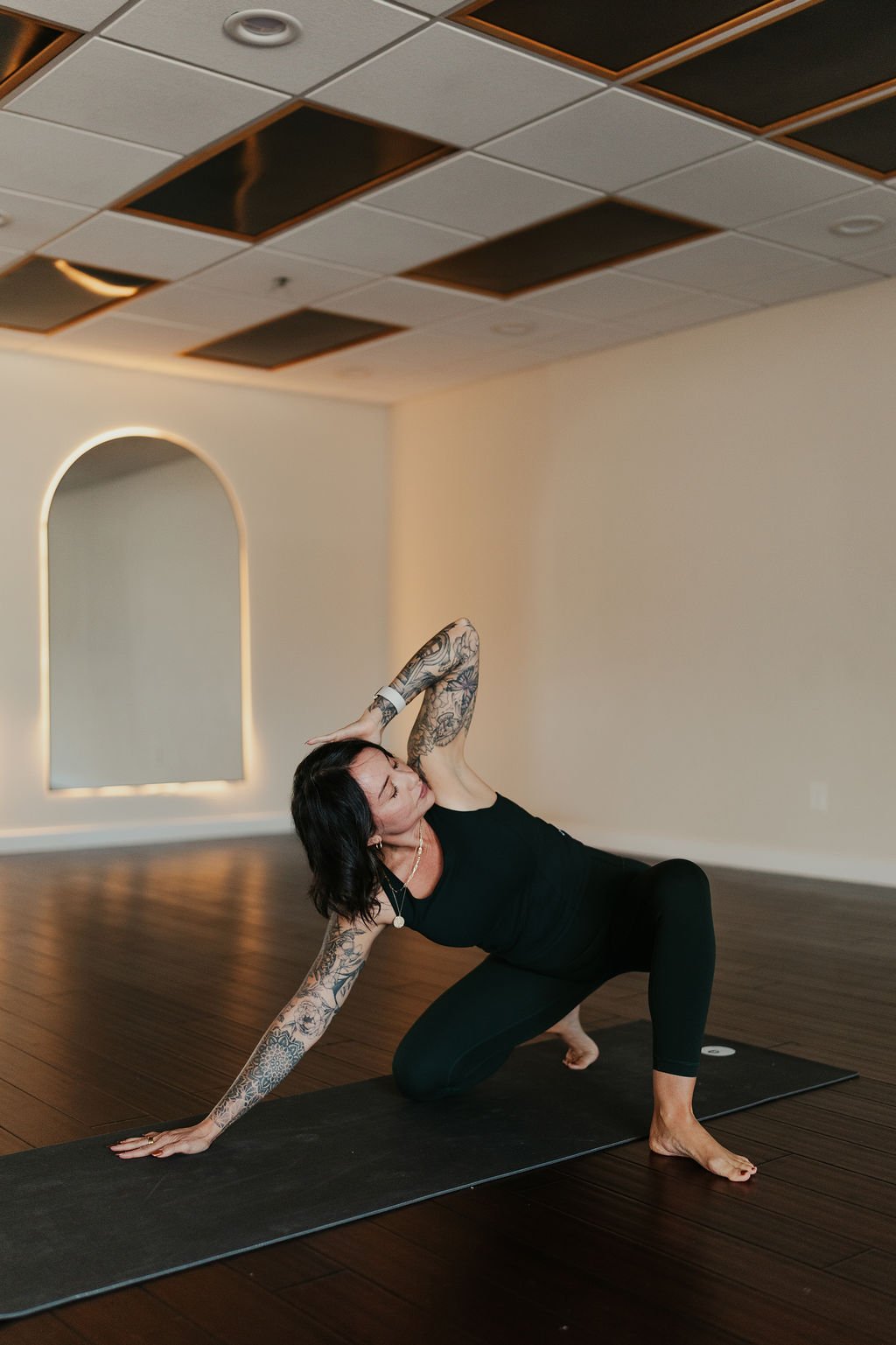
Yoga didn’t enter my life as a wellness trend, a fitness routine, or a way to stretch more. It came to me in July of 2005, at a moment when everything I understood about stability cracked open.
My father passed away suddenly that summer. He was the youngest of thirteen, so the reality of death wasn’t foreign to me. I grew up watching family members and friends transition throughout my life. But nothing prepares you for the moment grief lands in your own body. That summer, the world felt loud, chaotic, and unfamiliar. I didn’t know what I needed, but I knew I needed something. Some kind of movement. Some kind of anchor. Some way to find balance in a life that suddenly felt unrecognizable.
That is how I walked into my first yoga class.
Impermanence as a Teacher
In Buddhist philosophy, impermanence, or anicca, isn’t meant to be a heavy idea. It isn’t meant to scare us. It’s meant to wake us up.
Everything changes. Everything shifts. Everything and everyone we love will transform, fade, evolve, or one day disappear.
For most of my life, I understood death intellectually. In a big Mexican family filled with history, you witness the cycle of life early. But yoga helped me understand impermanence in my body. It gave me a place to breathe with it.
On my mat, I began to feel what philosophy had always been pointing toward: nothing, including grief, stays the same forever.
That realization didn’t erase the pain of losing my father, but it softened it. It made the chaos feel survivable. It made life feel sacred.
Movement as a Mirror of Change
We tend to think of our practice as a routine, but yoga is really a living record of who we are at any given moment.
Some days you feel strong.
Some days the breath doesn’t land.
Some seasons you are expansive and curious. Others you are held together by a single thread.
My practice in 2005 is nothing like my practice now.
My practice last year is nothing like my practice today.
And that is the point.
Movement has become one of the clearest mirrors of impermanence in my life. The way I move, the patterns I explore, the strength I build, the clarity I seek; they are always in flux, shaped by the seasons of my life, the people I have loved, the things I have lost, and the lessons that keep circling back around.
When we stop expecting ourselves to be the same every day, we start practicing yoga with more compassion. We release pressure. We welcome fluidity. We honor the truth of being human in a body that is constantly changing.

Why So Many Find Their Mat Through Loss
I hear the same story again and again.
My mom is fading.
My brother is sick.
Someone I love is leaving.
I need something to hold me together.
So many people find their way to their mat not because life is peaceful, but because life is shifting in ways they never asked for.
Yoga doesn’t fix the grief. It doesn’t rewrite the past. But it gives us a way to breathe through the truth that everything is temporary. And that isn’t a tragedy. It is the reason life is meaningful.
Impermanence teaches us to celebrate the people we love while they are still here. To honor the lives they lived. To feel the depth of their impact. To keep living fully ourselves.
It reminds us that every season, every inhale, every phase of our practice is a gift we only get once.
Finding Solace in the Temporary
Over the years, the dharma talks that have stayed with me the most are the ones that return to a single truth: everything is temporary and that is what makes life beautiful.
Every relationship, every season, every loss, every joy, they are all part of a cycle we are only asked to experience, not control. The more we soften into that truth, the more space we create for gratitude, resilience, and presence.
A Closing Note
I came to this practice in the midst of grief, but grief didn’t just break me open. It rearranged me. Losing my dad is the reason I first stepped onto a yoga mat, and it’s the reason I’m still here.
What he left me wasn’t just pain to work through. He left me values, work ethic, love, and the privilege to build a life where I could serve others. Not privilege in the flashy sense, but the kind that comes from being raised by someone who worked relentlessly, sacrificed without hesitation, and believed in showing up and helping people.
Because of him, I have been able to dedicate my life to teaching, to community, and to creating spaces where people feel supported through their own seasons of change.
My practice began with loss. It continues as an offering, a way to honor him, and a way to serve others walking through the same shadows I once did.